Key Takeaways
- FSSAI certification mainly ensures legal and safety compliance.
- It does not guarantee premium ingredients or product effectiveness.
- Consumers should still check ingredient quality and claims.
Why People Often Misunderstand FSSAI
Many consumers assume that seeing an FSSAI logo automatically means a product is healthy, high quality, or safer than alternatives. In reality, FSSAI certification works more like a baseline compliance system. It helps ensure products meet certain regulatory standards, but it should not be treated as a complete trust signal on its own.
This misunderstanding is common because marketing language often exaggerates what certifications imply. Brands may indirectly make consumers feel that a certification means superior quality, even when the certification itself was never designed to measure that.
What Is FSSAI?
FSSAI stands for the Food Safety and Standards Authority of India. It is the government body responsible for regulating food safety standards in India. Its role is to ensure food businesses follow basic hygiene, labeling, licensing, and compliance requirements.
In simple terms, FSSAI helps make sure products entering the market meet minimum legal standards for safety and manufacturing compliance.
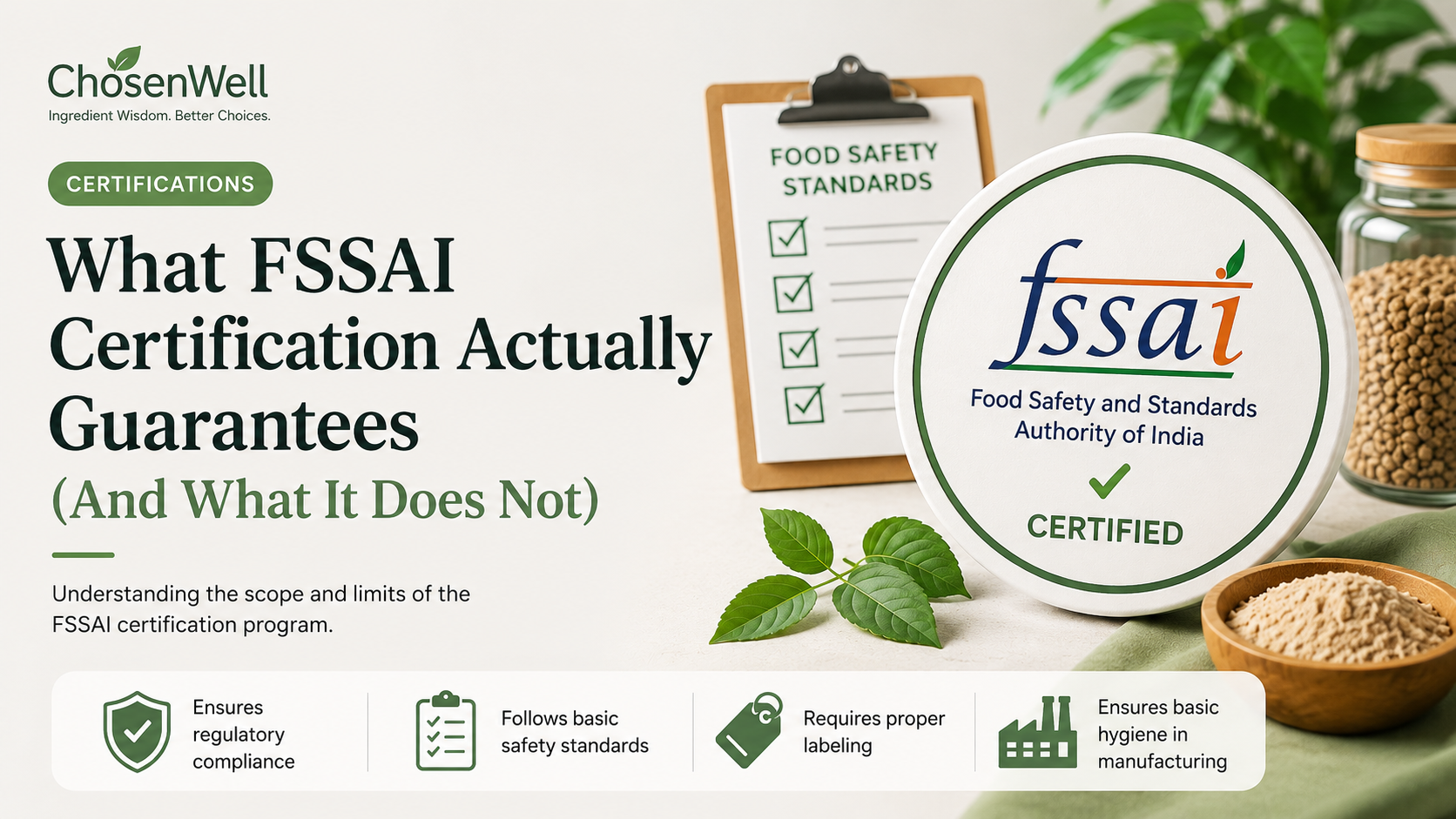
What FSSAI Certification Actually Guarantees
| FSSAI Helps Ensure | What It Means |
|---|---|
| Regulatory Compliance | The manufacturer follows required licensing rules |
| Basic Safety Standards | Products meet defined food safety norms |
| Labeling Requirements | Ingredients and nutritional details are disclosed |
| Manufacturing Hygiene | Basic operational standards are followed |
At its core, FSSAI certification exists to create a minimum safety baseline. It helps reduce risks from poor hygiene, illegal manufacturing practices, and misleading labeling.
"Think of FSSAI as a minimum trust threshold, not the final quality verdict. A product passing compliance checks can still have questionable ingredients or aggressive marketing claims."
What FSSAI Does NOT Guarantee
This is where many consumers get confused. FSSAI approval does not automatically mean a product is healthier, cleaner, premium, or more effective.
- Ingredient quality
- Clinical effectiveness
- Premium sourcing
- Low sugar or healthier nutrition
- Scientific backing of marketing claims
- Suitability for every individual
For example, an FSSAI-certified product can still contain high sugar, excessive additives, artificial flavors, or ingredients that may not align with your personal preferences.
Common Consumer Misconceptions
A very common mistake is assuming 'certified' means 'best'. Certification usually means legally compliant, not superior.
- FSSAI approved ≠ healthiest option
- Certified ≠ premium ingredients
- Legal compliance ≠ formulation quality
What Should Consumers Evaluate Instead?
Beyond certifications, consumers should evaluate products through a broader lens.
- Ingredient transparency
- Sugar and additive levels
- Evidence behind claims
- Brand transparency
- Third-party testing
- Suitability for personal health needs
Treat certifications as a starting point for trust, not the finish line.
Frequently Asked Questions
Frequently Asked Questions
Does FSSAI certification mean a product is healthy?
No. It mainly indicates compliance with food safety regulations, not nutritional quality or health benefits.
Can unhealthy products still be FSSAI certified?
Yes. Certification does not automatically evaluate sugar levels, additives, or overall nutritional value.
Should I ignore FSSAI certification?
No. It remains an important trust signal, but should be combined with ingredient awareness and product evaluation.
Final Takeaway
FSSAI certification matters, but consumers often expect more from it than it was designed to provide. It helps establish a baseline level of regulatory trust, but it does not replace ingredient literacy or careful product evaluation.
Sources
- Food Safety and Standards Authority of India (FSSAI)
- Indian food labeling guidelines
- Food Safety and Standards Act, India